Written by J. Dylan White
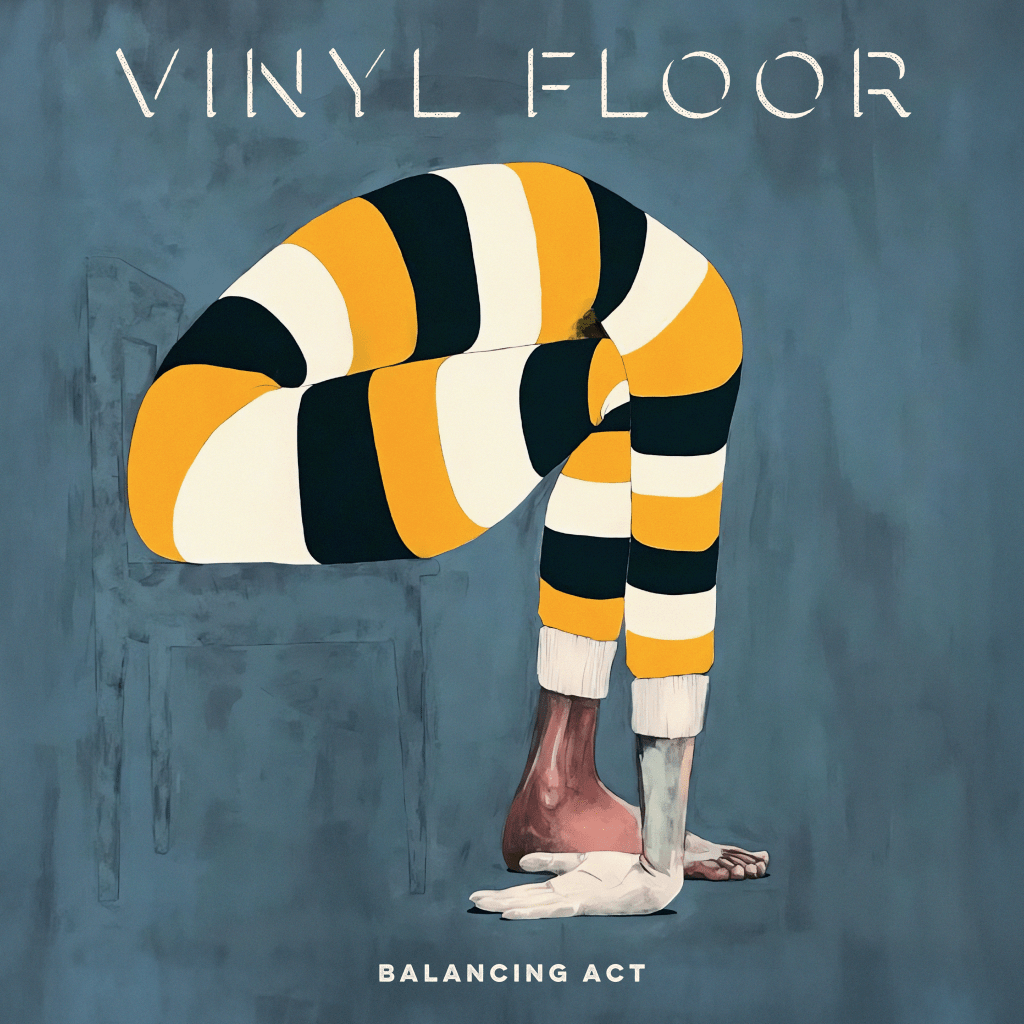
Riding the line of formulating catchy, modern melodies fused with vintage rock styles, Danish-based brothers Daniel Pedersen and Thomas Charlie Pedersen, also known as the duo Vinyl Floor, return with their sixth studio album, aptly named “Balancing Act.”
The band reunited with producer and engineer Emil Isaksson to record tracks for the album in 2024, before overdubbing and doing vocal work at their own studio in Copenhagen, Denmark, in 2025.
The new LP also features contributions from Bebe Risenfors (Elvis Costello, Tom Waits), primarily on wind instruments.
“Balancing Act” is best suited for fans of mellow, old-school rock who enjoy introspective lyrics and are not afraid of an uneven ride along the way.
The 13-track release is nearly 46 minutes, a little longer than the band’s previous album in 2022, “Funhouse Mirror.” However, the duo taps into the same creative vein for this album to create a tapestry of downcast wistfulness, evoking a distant cousin to early Coldplay.
“All This and More” opens the album in a breezy, carefree romp forming a direct contrast to its lyrics, which promise that “Nothing will stop us / Nothing will break us / Nothing will change our minds.”
Kicking off with a catchy, simple guitar hook, “I’m on the Upside” features tight vocal harmonization and a simple drumbeat to create a crowd-pleasing toe-tapper, and the guitar solo embedded in the last third of the song satisfyingly ties the melodic lines together.
Beginning with lo-fi electronic rhythms and instrumentation that weave throughout the runtime, “The Helping Hand” feels like a short stop along the way to another idea on the album. The song discusses someone who devotes themselves to helping others and the way those people take advantage.
Lyrically, the track has merit and explores deep feelings of unrest and mistrust. Musically, the song is unsure of where to lead and feels stuck without ever fully resolving in a meaningful way.
“Mr. Rubinstein,” one of the album’s singles, is the second-longest track on “Balancing Act,” clocking at just over five minutes. Centered on the experience of creative vulnerability and receiving criticism from an overbearing figure, the track encapsulates the inner thoughts and doubts of many music creators in a poignant way. With an upbeat, punchy piano and horn interplay to close the track, “Mr. Rubinstein” is one of the best examples of the vintage rock aesthetic Vinyl Floor attempts to capture.
Immediately making a contrast with foreboding minor chords and haunting harmonies, “Tell the World It Happened” is a clarion call to all listeners. The lines “Tell the world they’ve come for us….Tell the world it happened” are repeated numerous times during the track’s runtime, and the song is over as quickly as it began.
“Land of the Desert” is soft and folksy, mirroring the desert landscape the lyrics reference. Feelings of isolation, self-doubt, and desertion radiate from the lyrics, “Was I supposed to be driving by? / Why aren’t you listening?”
The track is one of the most dramatic departures from the established musical tone on “Balancing Act” but stands as one of the best tracks on the release.
“Back of My Hand” is a swaggering instrumental interlude that flows well from its predecessor, even if it is not essential for the album’s arc.
Picking up with a driving, melodic rock line, “Puppet Laureate” is an introspective piece examining inner sorrow and sadness as a driving creative force. Referred to as a “true, imaginary friend,” this sense of melancholy is juxtaposed with the track’s upbeat energy, offering a window into the creative mind.
“The Swan of Eileen Lake” soars, like the namesake swan, in its bittersweet choruses, layered in the well-wishes “I hope your beauty treats you well.” Possessing one of the largest dynamic and vocal ranges on the record, it stands out as something different and adventurous for “Balancing Act.”
“Adelaide” is a piano-centric, hymn-like ballad based on the main theme of the second movement of “Piano Trio No. 34” by Joseph Haydn. Leading into the bridge, a rhythmic electric guitar breaks through before two solo sections, separated by a final chorus, close out the track.
Focusing on systemic and cultural dysfunction in the music industry, “Less Dystopian Book” is swift in its thematic delivery, but beyond the arrangement of wind instruments with a contrasting melodic line, it tends to blend into the background among several other tracks.
“Jacaranda Blossoms” is the clear winner of the release, spanning over seven minutes with an intense, cinematic keyboard and synthetic instrumentation.
The jacaranda blossoms represent hope and new beginnings among the pain and hardship depicted. Charlie Pedersen writes the lyrics for this track, “A jacaranda blossoms where the streets were paved with blood / A jacaranda blossoms where a peace treaty could not.”
Danish guitarist Daniel Hecht, from Franklin Zoo and The Breakers, delivers a sprawling guitar solo that spans nearly the last three minutes of the track and provides the exact out-of-the-box element the entire album begs for in its runtime. Better late than never, the solo, coupled with the vivid lyrical imagery, elevate “Jacaranda” to the very top of the album’s entries.
The album closes with its title track, a simple, sparse arrangement of piano and muted hi-hat until the song lifts with the addition of electric guitar. Compared with the bravado and gusto of “Jacaranda Blossoms,” the two tracks would work better if their positions were swapped.
“Balancing Act” is a mixed bag of an album. While “The Helping Hand” and “Less Dystopian Book” have noteworthy ideas, their execution lacks compared to the rest of the record.
Though not a complete winner, “Balancing Act” is not without tracks that have the potential to resonate with listeners.
For example, “Jacaranda Blossoms” is the magnum opus of the entire release and elevates the whole album with its inclusion and opens doors to richer, more ambitious work ahead.

 Sound Words Central
Leave a comment