
Written by John Fleming
Country music of the last decade and a half or so has been defined by a perpetual battle between two warring factions. First, there is the pop-country scene, where “pop” is both a descriptor and a literal depiction of its relative fame.
This is the scene responsible for bro-country, a term rarely used to describe 2020s pop-country releases but which has clear musical descendants in the likes of Luke Combs or Morgan Wallen.
Secondly, there is the wave of less popular but more critically acclaimed artists like Turnpike Troubadours or Jason Isbell.
The clash is often musical but just as often cultural, creating this toxic sludge of discourse where affluent urbanites and suburbanites debate over which side is real country music.
The answer, of course, is neither, not only because a genre of music cannot be owned by a single demographic but because country culture has become a battle less over culture than over affectation.
Some artists have threaded the needle to various levels of success, making music with both pop sensibilities and an earnestness that can appeal to those with less appetite for whatever happens to be that moment’s Nashville sound. Chris Stapleton, for instance, is a country radio fixture who has maintained consistent critical acclaim, but he also began his musical career as an industry machine songwriter. He may represent what the machine could be in better days, but he is still inherently part of the machine.
Zach Bryan, however, is the artist who most successfully has struck a balance between “real” and “pop” country.
Part of it is background. He was not developed through any sort of pipeline but emerged organically through homemade demos recorded while he was enlisted in the United States Navy, giving him a sense of rootsy authenticity that is harder to claim when one emerges from the reality TV singing competition track, like Wallen.
But Bryan isn’t just the latest in a long line of country artists positioned as acceptable by those who normally sneer at country music – he makes genuinely popular, crowd-pleasing music.
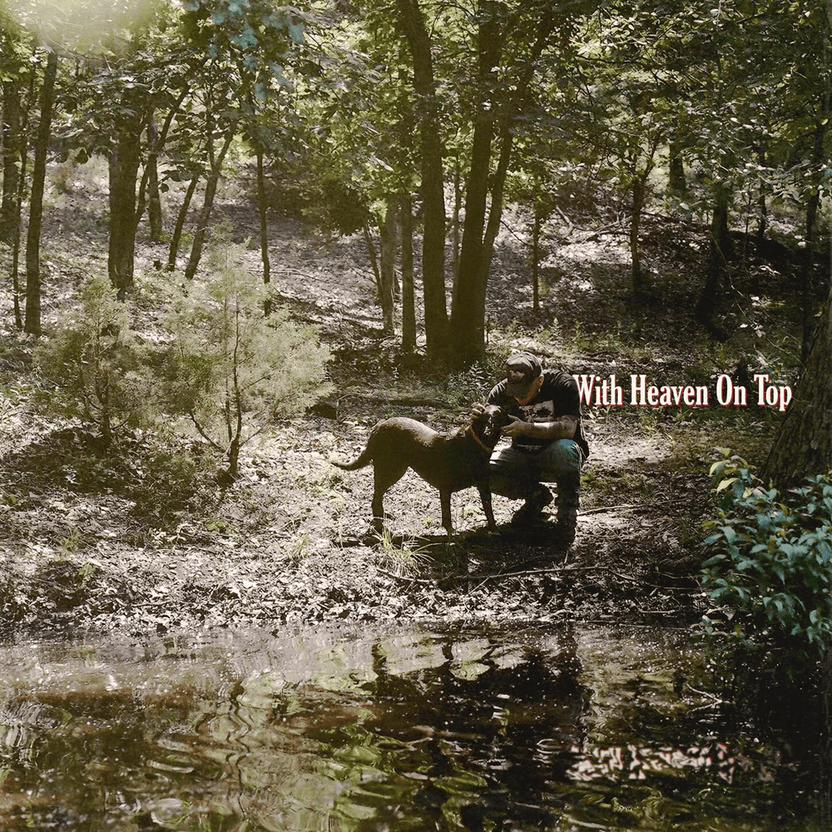
“With Heaven On Top” is the Grammy-winner’s sixth album, and depending on one’s definition of stardom, it is his third or fourth LP as one of the genre’s conquering heroes.
Of course, when it comes to Bryan, “the genre” is a somewhat nebulous concept, as his songs are equally likely to crack the rock charts as the country charts. So it goes achieving popularity during an era where very few new artists with any real popularity are categorized as “rock” from the onset.
But as much as the next generation of conventional stadium rock artists (think Kiss or Def Leppard) have been largely within the country sphere, Bryan is the spiritual successor to heartland rockers such as Bruce Springsteen and John Mellencamp.
Like most worthwhile music, it doesn’t fit neatly into the country or rock archetype, but while the latter is arguably more accurate in its description, country is far more marketable in 2020s America.
Much of “With Heaven On Top” is the type of slow-burn singer-songwriter music that those familiar with some of Bryan’s biggest hits, notably 2023’s “I Remember Everything,” will associate with him. But at 25 songs, running 78 minutes and 16 seconds, Bryan has a lot of room to incorporate different styles. Sometimes it works, and sometimes there is some fat to be trimmed.
The headline song, “Bad News,” which generated controversy when teased in October due to its lyrics critical of U.S. Immigration and Customs Enforcement (ICE), will be rendered particularly salient given the week of news preceding the album’s release.
Sonically, the track is a competent but mostly unexceptional, though its pointedly anti-authoritarian lyrics will surely continue to ruffle feathers.
But the most interesting musical moments come when Bryan goes into full Springsteen anthem mode. While he may not quite reach “Born in the U.S.A.”-level stadium bravado, he does dabble somewhere in range of “The River.”
The more sonically optimistic songs like “Say Why” or “Slicked Back” may not have the same serious tone of “Bad News” or of the album’s many odes to rural decay, but they are necessary to prevent the rest of the record from becoming uninteresting. “Rivers and Creeks” stands out as a particularly playful song vocally, the kind of track that reminds the listener that even a serious album can be a little bit of a party without being full-blown bro-country.
The thing that keeps “With Heaven On Top” from being anything more than a passable continuation of Bryan’s story, however, is its length. The album’s opening track, “Down, Down, Stream,” is a two-minute spoken-word track. It’s the kind of moment that is only truly earned on an album that is a cohesive artistic statement. And this LP feels more like a deluxe edition of a fairly conventional album.
But the real strength here is the lyrics, and it is the thing that makes Bryan stand out from most genuinely popular country stars – he speaks of the rural experience not as romantic nor destitute but as simply matters of fact.
Much as Springsteen was able to resonate with middle-American sensibilities by simply reporting on the heavily urban New Jersey, Bryan can communicate to a wider audience. And this is what carries him through what doesn’t necessarily feel like a step forward but also doesn’t feel like regression. Setting this album as a floor will assure that everybody is still paying attention if and when the evolution happens.


 Sound Words Central
Leave a comment