
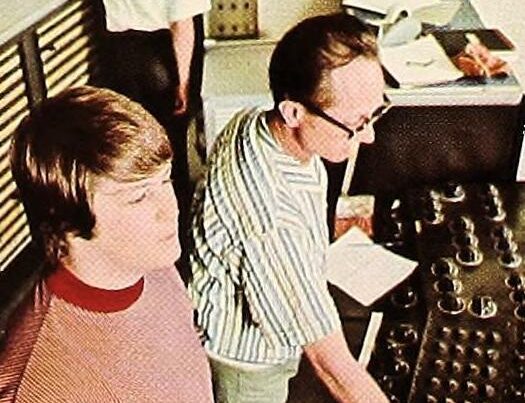
Written by John Fleming
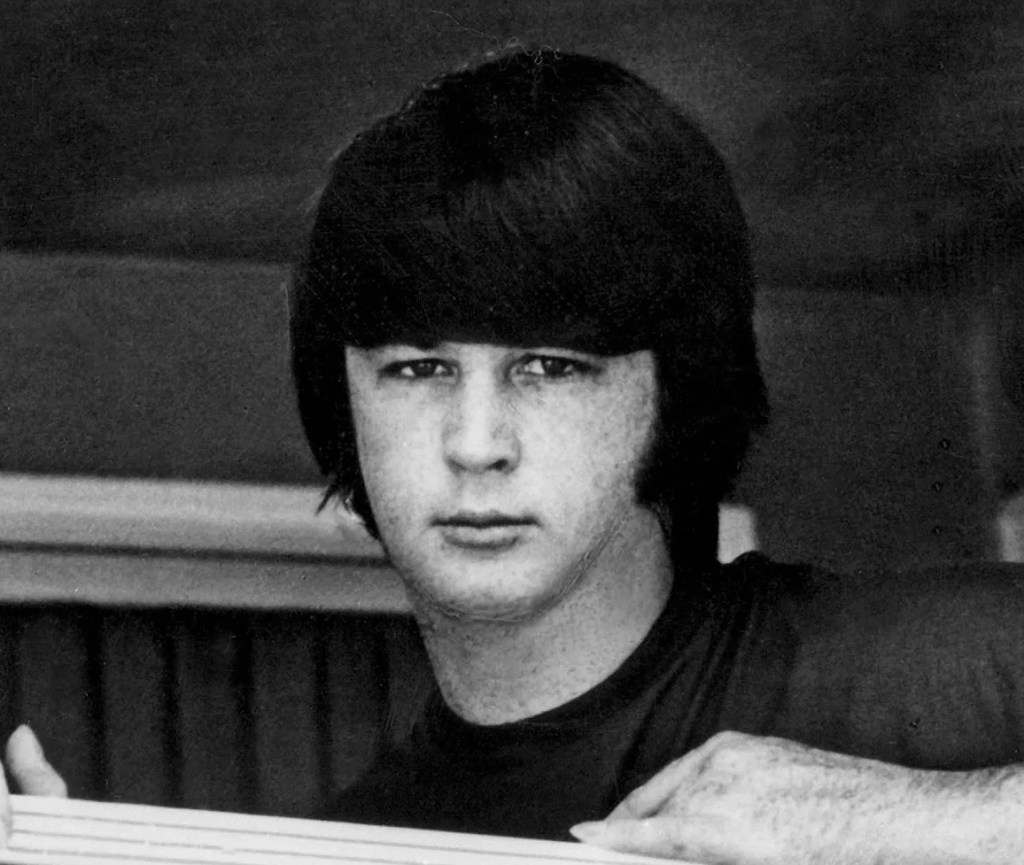
One could argue that Brian Wilson was the evolutionary step between composers in the classical sense of the word – the likes of Burt Bacharach, Leonard Bernstein or George Gershwin – and the frontperson-songwriter archetype that has largely dominated rock music in the subsequent decades.
Although he was influenced lyrically by his brother Dennis and by his Southern California upbringing more broadly, the influential artist, who has passed away at the age of 82, was not a surfer nor somebody especially attuned to the burgeoning cars-and-girls teen culture of his era – he was, at his core, an artist.
There is a tendency, well-meaning but often a bit sloppy, to valorize the darkest elements of Brian Wilson’s life as part of his hero’s journey. Wilson struggled with his mental health throughout most of his adult life, and the most famous beats of this story became romanticized elements of Wilson’s lore, something inextricably linked to his creativity.
Our culture’s attitudes toward mental health have oscillated wildly since Brian Wilson’s mental health struggles first came into the public consciousness, and the far more empathetic tone with which Wilson was treated in the final years and decades of his life has been overwhelmingly positive. But it also misses a larger point about him, which is that his musical genius was not formed by his often-crippling depression. Rather, Brian Wilson was an extraordinarily significant figure in the history of pop and rock music, who rose above his trying circumstances.
Wilson’s magnus opus, both in terms of music and how he is perceived as a larger cultural figure, will always be “Pet Sounds,” but the seemingly basic pop-rock of the Beach Boys’ early years remain an integral component to the larger story.
The Chuck Berry-inspired “Surfin’ USA,” the doo-wop of “Surfer Girl” and the pure power pop of “Fun Fun Fun” or “I Get Around” may have broken less musical ground than “God Only Knows,” but they served as the soundtrack for a significant piece of Americana.
For anybody who grew up after the conclusion of the Beach Boys’ heyday, there is often a strident-yet-reductive belief that the critical peak’s work is what really matters and that the early work is childish. But the previous output is more notable than just the path that led to “Pet Sounds” for the Beach Boys, not dissimilar to the Beatles music that predated “Revolver.”
A song like “California Girls” sums up the Brian Wilson experience. The 1965 song has been so baked into subsequent musical culture that it exists independently of its origin.
As an example, Katy Perry had a summer-defining song in 2010 named “California Gurls” and every bit as much digital ink was spilled on connecting it to Big Star’s “September Gurls” rather than the more famous song by the more famous band.
As great of a song as “September Gurls” is, it ultimately belonged to Alex Chilton. “California Girls” belongs to the world. But in the moment, the song’s dream-like harmonies were clearly setting the path for a song like “Good Vibrations.” Songs that subversive to pop music standards aren’t supposed to be that culturally significant. Alongside his rivals John Lennon and Paul McCartney, Brian Wilson was one of the small handful of people who could bridge that gap.
In his later years, Wilson would occasionally show public glimpses of himself that seemed inconceivable during his reclusive period. He would sit for filmed interviews and occasionally crack a joke or two. He somewhat infamously once claimed that his favorite movie was the critically reviled 2007 Eddie Murphy comedy “Norbit,” but his level of earnestness in this claim was never fully vetted.
He spoke positively of the biopic “Love & Mercy” while acknowledging that the film did not always make him look especially noble. At varying times in his life, Wilson seemed both immortal and like he had disappeared in the late-’60s or early-’70s like he was Jimi Hendrix or Jim Morrison. This dichotomy makes today’s news of his death seem simultaneously inevitable and impossible, but with time, we will likely view Brian Wilson less as myth and more as one of the great pop songwriters humanity has ever produced.




 Sound Words Central
Leave a comment