
Written by J. Dylan White

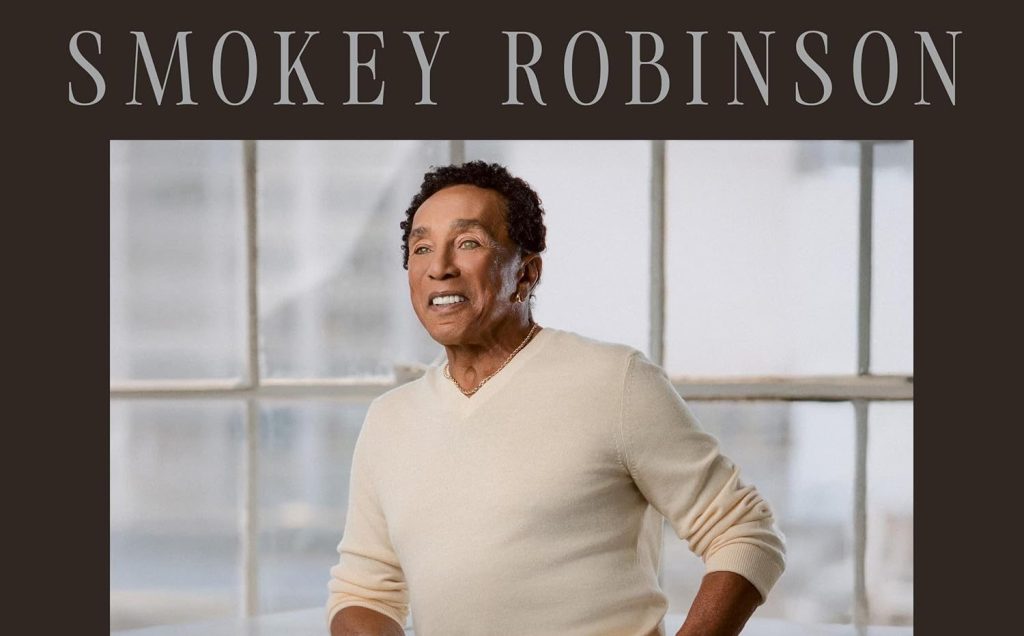
In a turbulent and evolving world that has seen rapid changes since the beginning of his career, Smokey Robinson offers an antidote to the tumult in his latest release, “What The World Needs Now,” a catalog of covers featuring inspirational and uplifting classics, many spanning back more than four decades.
The 85-year-old Motown icon goes back to bedrock fundamentals of the genre and incorporates his signature smooth timbre, honed by his plentiful years of experience sharing music with audiences worldwide, with classic songs originally brought to the limelight by artists like Bill Withers, Carole King, Bob Marley and Louis Armstrong.
Centered on themes of love, hope and peace, Robinson’s reverence for the source material within wraps them in a thick layer of nostalgia, recalling simpler times.
With a career spanning over 60 years, the expectation of a new album release is not for the three-time Grammy Award winner to produce groundbreaking, revolutionary music that shadows his prior, most popular work. Instead, Robinson delivers exactly what artists of his status are expected: homages to their work and reverent celebrations of their contemporaries and influences.
“Be Thankful For What You’ve Got” opens the album with a swanky bass line and snare hits that tiptoe ever-so-slightly into the full-bodied nature of smooth jazz while maintaining their funk identity. Robinson’s slightly raspy falsetto highlights the track, making it a welcome modernization of the 1974 William Devaughn original.
The quintuple platinum certified hit “What a Wonderful World,” first recorded by Louis Armstrong, follows the album opener with a quaint, easy-going entry. This track is a victim to the song’s overarching cultural popularity and saturation, and Robinson’s rendition struggles to distinguish itself in any significant way from other covers of the timeless classic. Although, it fits perfectly with the themes of the album.
While Bob Marley’s tonal fingerprints are present from the first note of “Three Little Birds,” this is where Robinson truly transforms the track with his unique style. Instead of a straight reggae cover, Robinson allows his trademark vocals to infuse the song with an even deeper soulful flair, creating a rendition far more memorable than the previous track on the record.
Robinson takes a similar approach with “Everything Is Beautiful,” which flirts with the gospel undertones present in the 1970 Ray Stevens standard. This track doesn’t indulge with the country elements present in the original, but it is still one of the most playful tracks on the album.
The title track is the most emotionally compelling and passionate Robinson seems on the record, with a crooning opening line, “What the world needs now is love, sweet love.” The purpose and message of the album shines through, as Robinson prayerfully implores “Lord, we don’t need another mountain” and proclaims the freedom and joy that love can bring to the world instead of the obstacles of division.
Robinson takes a slower, more relaxed approach as opposed to Jackie DeShannon and Dionne Warwick’s versions of the song. With this thoughtful, methodical pacing, Robinson crafts one of the best tracks on the whole album.
“Lean On Me,” the Bill Withers classic, begins the back half of “World,” and Robinson is comfortably in his wheelhouse with some of his best vocal work on the release. The Wurlitzer adds a signature swagger to the ebb and flow of the track, and Robinson gives a very respectable homage to the original with an infectious, fun energy.
The soulful gospel stylings carry over to a cover of the Staple Singers’ “I’ll Take You There,” a 1972 hit that reached No. 1 on the U.S. Billboard Hot 100. Robinson’s version is much fuller and more sonically dense than the Staple Singers’ but maintains some defiant rhythmic edge. The original does take more risks with the vocal melody, however.
Closing out the covers on “World,” Robinson takes on the Grammy Award-winning “You’ve Got a Friend.” Robinson strikes out on his own path, finding a bluesy middle ground between the famed piano ballad of Carole King’s rendition and James Taylor’s folksy picking of the track.
“You’ve Got A Friend” is the longest track on the record, and while Robinson doesn’t provide a grandiose payoff to the buildup of the album or the track itself, it is a serviceable bookend to the covers on the release.
Moving beyond the covers, the album concludes with two rereleased tracks from Robinson’s prior catalog, specifically chosen for their lyrical and thematic resonance with the collection. “Be Kind To The Growing Mind,” featuring the Temptations, comes from the 1986 album “Smoke Signals,” and exhorts listeners to be careful and disciplined with their words and speech due to the influence over others they can possess.
“Food For Thought,” originally released in 1981 on “Being With You,” closes the album with some tidbits for reflection about the effect of powerful people in the world and the way people interact in society, pushing others to be better versions of themselves.
“What The World Needs Now” is a delight for fans of Smokey Robinson’s work, and worth a listen for anyone who is remotely interested in classic soul, if nothing else than to hear a living legend at work. The album holds true to the formula of most cover albums: recreating tracks unique enough to be memorable and interesting, but close enough to still be recognizable as the original song.
However, its longevity matches its novelty. While Robinson competently handles the material, it is fantastic when executed well but leaves no lasting mark when anything less.


 Sound Words Central
Leave a comment